International Literacy Day Clipart: A Powerful Tool for Educators and Creators
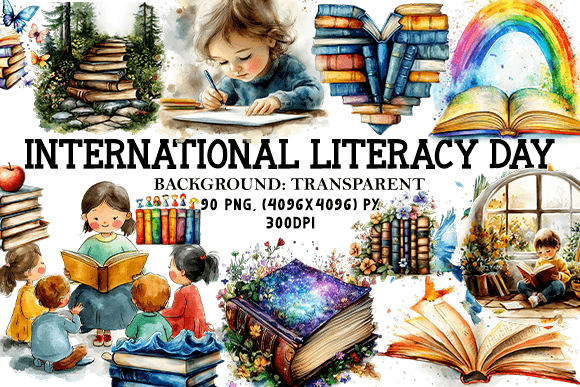
International Literacy Day Clipart is a collection of high-quality graphic assets designed to support literacy initiatives and educational projects. These clipart files are ideal for anyone looking to visually reinforce the importance of reading, learning, and knowledge in their work or personal goals. Whether you're an educator, designer, marketer, or hobbyist, these images can enhance your creative process and help you communicate key messages more effectively.
Understanding International Literacy Day Clipart
International Literacy Day Clipart refers to a set of digital graphics that celebrate the value of literacy. These images often feature symbols like books, pens, reading glasses, and other educational elements. Each file is typically a PNG with a transparent background, allowing for easy integration into various design projects. The collection includes 90 unique designs, each crafted with attention to detail and clarity at a resolution of 300 DPI.
This type of clipart fits naturally into broader workflows that involve content creation, marketing, education, and event planning. It serves as a visual aid that supports messaging around literacy, making it easier to convey ideas through imagery. Whether you're preparing materials for a classroom, designing promotional content, or working on a personal project, these assets can streamline your process and add a professional touch.
Using International Literacy Day Clipart in Your Workflow
International Literacy Day Clipart can be used at multiple stages of a project. Before starting, you might use these images to brainstorm visual themes or develop a cohesive design concept. During the execution phase, they can serve as building blocks for layouts, illustrations, or digital assets. After completion, they may be repurposed for social media, presentations, or future projects.
For example, if you're creating a lesson plan, you could incorporate clipart to make handouts more engaging. If you're designing a poster for a literacy event, these images can add visual interest without requiring advanced design skills. In digital marketing, they can be used to create eye-catching graphics for blogs, emails, or social media posts.
Integrating Clipart into Different Tools and Platforms
These clipart files are compatible with most design software, including Adobe Photoshop, Illustrator, Canva, and even Microsoft PowerPoint. Their transparent backgrounds allow for seamless layering, making it easy to combine them with text, other images, or custom illustrations. This compatibility ensures that you can use them across different platforms without worrying about formatting issues.
When working with a team, these assets can also improve consistency. By using the same set of clipart across multiple projects, you maintain a unified visual identity. This is especially useful for businesses or organizations that want to reinforce their brand message while promoting literacy-related initiatives.
Practical Implementation Tips
To get the most out of International Literacy Day Clipart, consider organizing your files in a way that aligns with your workflow. Create folders based on use cases—such as classroom materials, event decorations, or digital content—to ensure quick access when needed. Labeling files clearly can also save time, especially if you're working on multiple projects simultaneously.
Another tip is to experiment with different sizes and placements. While the clipart comes in generous dimensions, you may need to resize them for specific applications. Always maintain the original quality by avoiding excessive scaling. Additionally, test how the images look in both digital and print formats to ensure they meet your standards.
Workflow Examples
Consider this scenario: a teacher is preparing a literacy-themed presentation for students. They can use clipart to create title slides, infographics, and visual aids that make the content more engaging. By incorporating these images, the teacher enhances the overall experience and helps students connect with the material on a deeper level.
For a small business owner promoting a book fair, International Literacy Day Clipart could be used to design banners, flyers, and social media posts. These visuals not only attract attention but also reinforce the message of the event. The ease of use means the owner can quickly produce professional-looking materials without needing advanced design skills.
Long-Term Use and Value
Investing in a clipart bundle like International Literacy Day Clipart offers long-term value. These assets can be reused across multiple projects, saving time and effort in the long run. They also provide a consistent visual language that strengthens your brand or message over time.
Additionally, the high-quality nature of these files ensures that they remain relevant and usable for years. As trends evolve, the timeless design of many literacy-themed elements means they can still be effective in new contexts. This makes them a smart choice for anyone looking to build a library of reusable resources.
Quality Control and Consistency
When working with clipart, maintaining quality control is essential. Always check that the images are free from distortions, blurriness, or color inconsistencies. This is especially important if you're using them in print materials, where even minor issues can affect the final result.
Consistency is another key factor. If you're using these clipart files across multiple projects, ensure that they align with your overall design style. This helps create a cohesive look and feel, which is crucial for branding and professional communication.
Conclusion
International Literacy Day Clipart is more than just a collection of images—it's a practical tool that supports a wide range of creative and professional activities. From educational settings to marketing campaigns, these assets can enhance your workflow, improve visual communication, and add value to your projects. By integrating them into your process, you can create more engaging content, streamline your design tasks, and promote the importance of literacy in a meaningful way.